I think it is safe to say that most platforms of social media have had a huge impact on the way we receive and interpret online information. This includes the way politicians spread their ideas and visions. The use of social media has many benefits, not just for the politicians, but for the reader as well. Those benefits being the ease of access to information, the instant availability of information, the better connection between the politician and their followers, and the cost effectiveness compared to traditional media.
However, The wide use of social media also has its down sides. Those being the greater possibility of false information and the ability of the politician to create unnecessary controversies.
First of all is how politicians use social media advertising to utilize the ease of access to information. Before social media was mainstream like it is today, people received their information through sources like newspapers. This made it more of a hassle for people to get the news, thus making it harder for the politician to reach out to people. According to a Pew Research Center study, more Americans today get their information through social media than through newspapers.
Elisa Shearer, a research associate for the Pew Research Center says that, “One-in-five U.S. adults say they often get news via social media, slightly higher than the share who often do so from print newspapers (16%) for the first time since Pew Research Center began asking these questions.”
Second of all is how politicians use social media advertising to utilize the instant availability of information. Today, it is very rare for a person to not have a smart phone or some device that allows them to access the internet. The ability to access information wherever you are allows politicians to post updates and really whatever is on their mind to their followers in a timely manner.
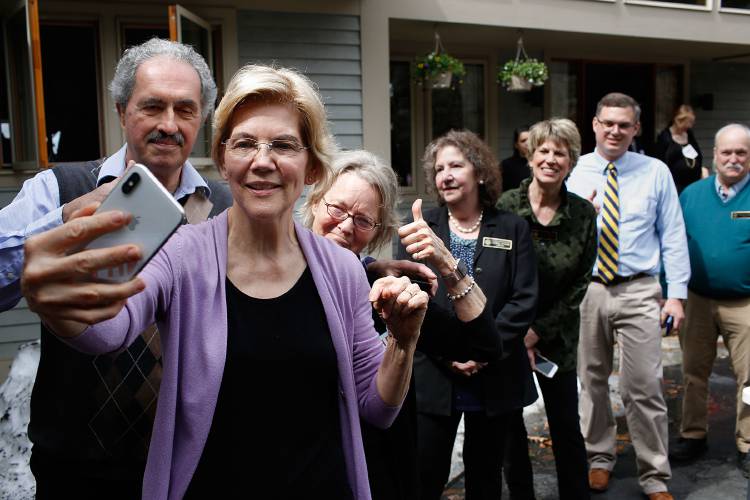
Third of all is how politicians use social media advertising to further connect with their followers. With traditional media like newspapers, politicians can not directly interact with the public. Newspapers must go through many editors before they can be published whereas social media allows politicians to talk directly to the public without the extra hurdles. Many politicians use social media to connect with their constituents, but the presidential candidate Elizabeth Warren is the most prevalent example.
At the 2019 democratic debate, Warren said “I made the decision when I decided to run not to do business as usual… and now I’m proud at 100,000 selfies.” This ability to be closer with her not only gives her supporters a picture with her but it also sends a message to everyone that she truly cares about her supporters by taking a large chunk of time out of her day. Warren can also gain valuable insight about what her supporters want her to accomplish.
Lastly is how politicians use social media advertising in order to be more cost effective. Many social media platforms ads today cost significantly less compared to traditional media. In addition, social media also allows the politician to target more specific audiences than traditional media. According to an article on Uhuru, “Social media marketing is far less expensive. You’ll pay a fraction of the traditional media price to reach the same number of people (or more) and you’ll be reaching the audience you want.”
However, one disadvantage of politicians using social media advertising is the greater possibility of spreading false information. As I mentioned previously, news companies like The New York Times and The Washington Post go through a process that requires the revision and fact checking of multiple people before it can be published, thus allowing better accuracy for their news report. Platforms like Twitter allow politicians to reach a large amount of people and say anything they want, regardless if it is true or not.
According to Tom Jarvis, a writer for an online news website called The Drum, says that “The weaponization of digital communication has led a campaign group made up of advertising professionals to call for better regulation on political ads. The Coalition for Reform in Political Advertising says at least 31 campaigns have been ‘indecent, dishonest or untruthful’.”
Another disadvantage of politicians using social media advertising is the ability of the politician to start unnecessary controversies. I feel that many of the political advertisements today are not necessarily what the politician wants to accomplish, but instead what the politician’s opponent doesn’t do well.
In conclusion, the use of social media has many benefits, not just for the politicians, but for the reader as well. Those benefits being the ease of access to information, the instant availability of information, and the better connection between the politician and their followers. However, The wide use of social media also has its down sides. Those being the greater possibility of false information and the ability of the politician to create unnecessary controversies.
 Grant's Blog